

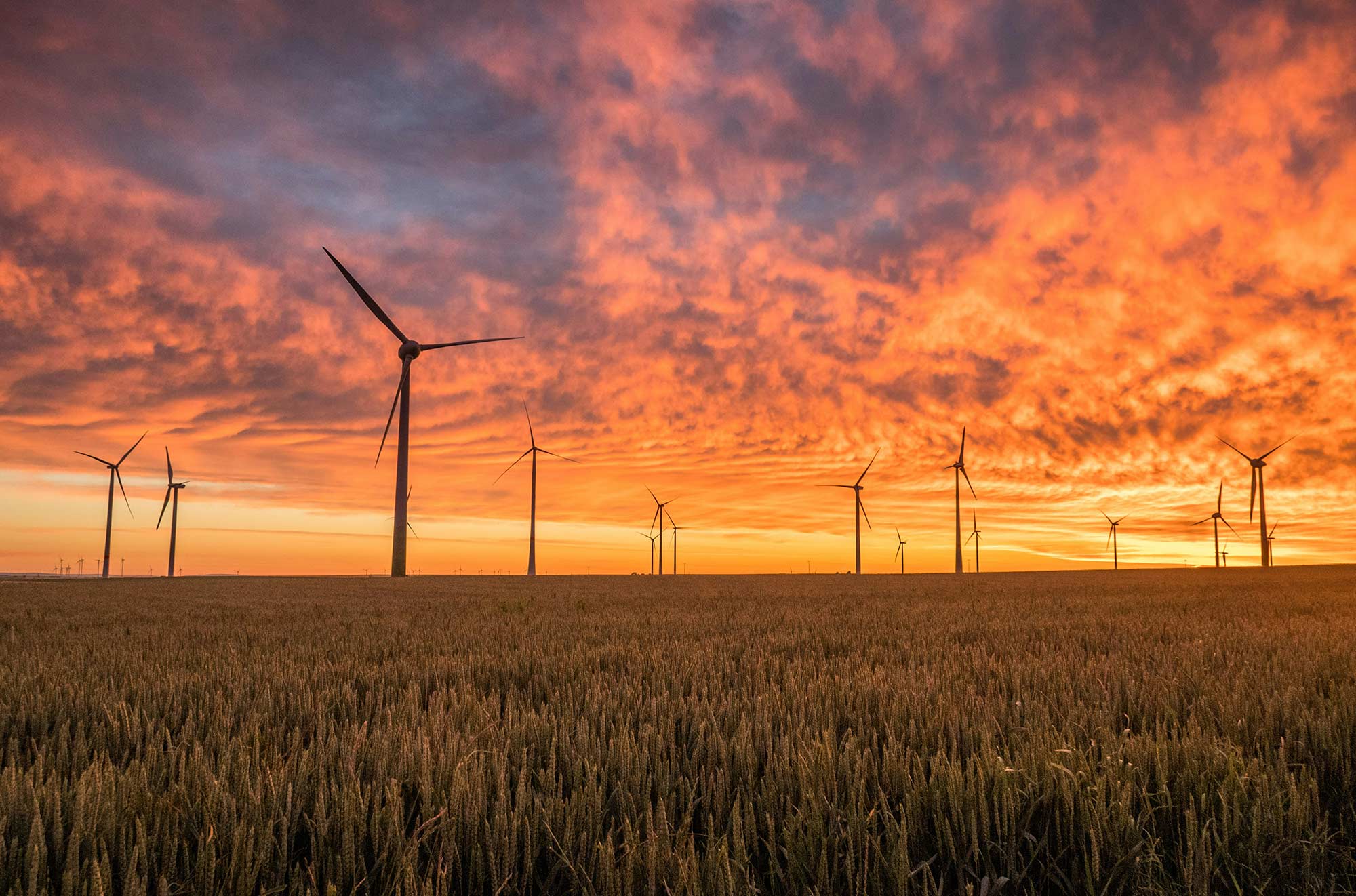

The Australian Capital Territory’s (ACT’s) “100% renewables policy” is old news. Legislated in 2011, it largely took the form of the government striking a series of feed-in tariffs (FiTs) with renewable generators until it had procured enough capacity to deliver energy equivalent to top-up the ACT’s actual share of renewable generation to at least 100% of its overall electricity consumption. Some of the FiTs are with household and commercial scale rooftop solar, but most of the generation comes from large-scale projects.
The challenge for the ACT is that as a small territory, it doesn’t have the space to host much by way of large scale generation. Its actual electricity supply thus mostly comes from outside the territory - it’s within the NSW region of the National Electricity Market (NEM). This also means that most of the generation it underwrote with the feed-in-tariffs is also outside the ACT. In fact, most of it is outside NSW, which undermines one of the ostensible goals of the policy –to stabilise electricity costs for NSW consumers.
While it was much lauded and discussed in the 2010s, the policy is rarely looked at these days. Accordingly it’s worth checking in now and then to see how it is playing out. The FiTs can be divided into three tranches.
Tranche 1 is the in-territory generation. This comprises four stand-alone solar projects and while some of these were large at the time they were installed, (up to 20MW) they are dwarfed by today’s solar projects, such as the 520MW Stubbo solar project that was commissioned late last year.These have feed-in tariffs of $178/MWh - $196.50/MWh, and so ACT consumers pay a hefty premium for these projects over the market cost of power – not least because as solar projects they earn well below the average wholesale price. The output and feed-in tariffs of these projects for the last quarter for which data is available (3 months to 31 March 2025) are shown in Table 1 below:
Majura solarshare is both the smallest and the most expensive project supported. Unlike all the other large scale projects, it gets to keep the renewable certificates (RECs) it generates. The ACT collects and voluntary surrenders the other projects’ RECs in order to demonstrate the additionality of its policy. Majura is only supported because the ACT government pre-committed to supporting a community solar project. Majura is owned by a group of individuals (it’s not community owned in the not for profit sense). Despite the exceedingly generous terms of its FiT, the project struggles to generate a decent return in investment.
Tranche 2 consists of seven wind farms, mostly between 80-100MW in size across NSW, Victoria and South Australia. These all came online between 2016-19 at FiTs ranging from $73-$92/KWh. As such, they are much cheaper on a $/MWh basis than the solar farms, and sometimes pay money back to the ACT when wholesale prices are very high. In general, though, they are still net recipients, averaging $30.15/MWh subsidy for the last 3 months, as per table 2.
The FiT prices are not inflation linked, meaning they decline in real terms. It’s likely, therefore that the average subsidy for these wind farms will decline over time, and as these represent around 80 percent of the output covered by the FiTs, this will go a long way to reducing the cost to ACT consumers.
Tranche 3 are the latest addition, which although contracted in 2020 have only just come online (and their output suggests they may still be being progressively commissioned. These are two further wind farms, but contracted at far lower FiT prices ($45-$54/MWh) reflecting the rapid fall in renewables costs over the decade or so that the scheme has been running. As such, they are currently paying back to the ACT government, which helps defray the costs of the other subsidies.
These wind farms are not guaranteed to always pay back – if the wholesale prices in South Australia/Victoria fall, then they could also require a subsidy. But there is also a clause in the contracts that allows a generator to cancel the contract. If these wind farms continue to have to payback some of their revenue, the chances of them activating that clause grows.If that happens, there’s a chance that the ACT will have to find some other way to meet its targets. Fortunately, as the rest of the NEM gradually decarbonises, the target is shrinking, and it may find that it still has enough output from the remaining contracts to cover the gap.
Australians have been aware of the need to reduce greenhouse gas emissions for several decades. One element of the energy transition is the decarbonisation of natural gas distribution networks (GDNs). Natural gas (methane) is a greenhouse gas that, when combusted, produces carbon dioxide, another greenhouse gas. Most of the gas that flows through gas networks will be combusted (some is used as a feedstock for chemical processes) and thus contribute to climate change. Methane that leaks from gas pipelines contributes directly to climate change as well.
The Australian Capital Territory’s (ACT’s) “100% renewables policy” is old news. Legislated in 2011, it largely took the form of the government striking a series of feed-in tariffs (FiTs) with renewable generators until it had procured enough capacity to deliver energy equivalent to top-up the ACT’s actual share of renewable generation to at least 100% of its overall electricity consumption. Some of the FiTs are with household and commercial scale rooftop solar, but most of the generation comes from large-scale projects.
In recent years Retailer Certificate Schemes (RCSs) have become a popular tool for Australian governments to deliver energy policy goals without having to directly fund them. The first of these was the Renewable Energy Target (RET) established in 2001. Towards the end of the 2000s several jurisdictions introduced energy efficiency RCSs. More recently, some governments have consulted on the introduction of RCSs aimed at supporting renewable fuels such as green hydrogen and biogas.